A Guide to Managing Multi-Cloud Complexity and Costs
TL;DR
Multi-cloud environments offer flexibility and freedom but also introduce significant Multi-cloud complexity, making it harder to manage resources, costs, and risks. Cloud2Gether addresses these challenges by centralizing real-time provider data, automating processes, and generating actionable recommendations. This empowers both finance and engineering teams to make informed decisions, reduce unnecessary expenses, and maintain effective cloud governance. Achieving transparent and unified cloud management has never been more attainable.
Key Takeaways
- Cloud complexity and cost is amplified by Multi-cloud. Centralized management is the cure.
- Resource cataloging with real provider data is a game changer for cloud hygiene.
- Automation across account discovery, billing, and recommendation engines reduces waste and strengthens governance.
- FinOps practices foster collaboration between engineers and finance, surfacing optimization opportunities.
- Centralized, actionable insights bring finance and technology together—making the business case for transparent cloud.
Understanding why cloud complexity happens
Cloud complexity can sneak up on even the most mature organizations. It starts with well-meaning choices: adopting multiple cloud platforms to avoid vendor lock-in, support specific workloads, or enable faster product development. Over time, every cloud provider brings a unique set of APIs, billing models, resource types, and security settings.
What happens next? Resource sprawl, unexpected costs, tricky integrations, and security gaps start to multiply. In a recent global survey, 94% of IT leaders admitted they struggle to control cloud expenses, while nearly half don’t have reliable visibility into spend. We’ve found this is where chaos turns expensive, fast.
Let’s look at what lurks beneath the surface:
- Resource sprawl: Dozens or hundreds of forgotten instances, disks, snapshots, or services, scattered between AWS, Azure, Google Cloud, and specialty providers
- Fragmented billing structures, with each provider using different cost breakdowns and charge cycles
- Poorly tagged resources, making it hard to allocate spend or enforce governance
- Integration hurdles between clouds, on-premises systems, and SaaS apps
- Difficult visibility for security risks and compliance gaps, multiplied across different platforms
- Engineering and finance teams working from different “sources of truth”
If you’ve experienced even two or three of these, you’ve seen how unwieldy modern cloud management can get.
 Key sources of multi-cloud cost and risk
The most common traps stem from lack of visibility, fragmented policies, and unmanaged billing. In our experience supporting multi-cloud portfolios, these are the patterns we see repeatedly:
- Teams launch new resources for short-term projects but forget to shut them down. Months later, they’re still running—and billing.
- Bills are difficult to decode, as every provider’s line items and account structures differ. Finance ends up guessing or building ad hoc spreadsheets.
- Policy enforcement gaps appear as fragmented security groups, IAM roles, or network rules, especially across regions and providers.
- Vendor lock-in becomes invisible: sometimes subtle decisions in architecture or use of proprietary services make migration or switching harder than expected.
“Shadow IT” is also a frequent topic—when business units, developers, or contractors use cloud outside of official guardrails.
What you can’t see, you can’t control.
How a unified platform rewrites cloud complexity
We believe the only sustainable answer is a platform that blends direct cloud account connections, detailed daily billing, and unified cataloging of all your assets. Cloud2Gether is built precisely for this scenario.
With our CloudProvider Agent, we securely connect to your cloud accounts, scanning for every resource type, every tag, every linked CloudFormation stack or deployment artifact. This data is gathered daily—no more outdated snapshots or missing assets.
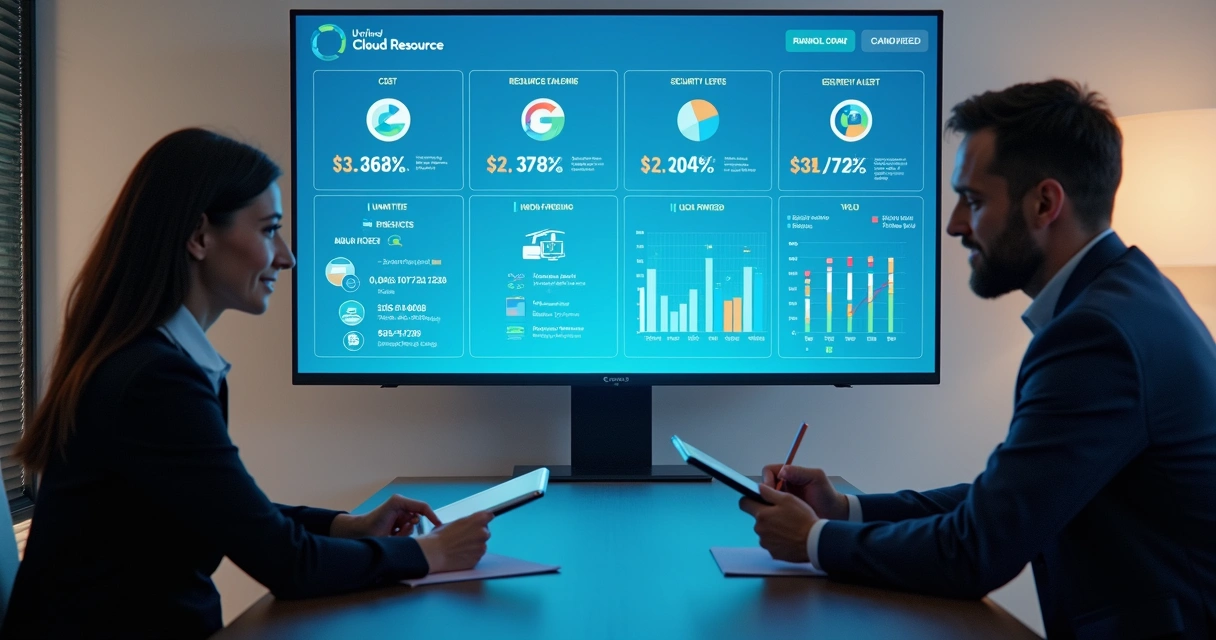
These technical details power the Resource Catalog, where assets are grouped by provider, resource class, and location, with tags aligned to your business needs. From this ground truth, we overlay daily billing data and—critically—pull in native recommendations from AWS Trusted Advisor, Azure Advisor, and similar tools. Now, both the finance and engineering teams see the same big picture.
 Cost control and reducing vendor lock-in in a multi-cloud world
FinOps principles matter most once you’re operating across multiple clouds. We’ve integrated granular cost tracking per service and per region, so it’s easy to spot underused resources or areas where reserved capacity could lower spend.
- Track cost evolution by cloud, team, application, or feature set
- Surface risks, such as over-provisioned services or premium add-ons that aren’t needed
- Detect subtle patterns of lock-in, such as reliance on cloud-native databases or AI features that are hard to migrate
- Compare internal benchmarks with provider-native and Cloud2Gether’s own cost-saving recommendations
By federating this data to both finance and technical leadership, we help foster shared accountability. There’s no longer a mystery about why the bills are spiking mid-quarter.
Want to see how Cloud2Gether transforms this for your team? Start your multi-cloud transparency journey with us.
Automating diagnostics, policy, and best-practice adoption
Automation helps relieve human error and frees up both Ops and FinOps teams. Once your resource inventory and billing feeds are centralized, you can trigger daily policy checks, enforce tagging standards, and catch costly drift as it happens—not months later.
With our tools, you can automate:
- Detection of untagged or non-compliant resources, with context for who owns them
- Policy checks against company security or governance standards
- Billing anomaly alerts before significant overages occur
- Prioritizing fixes based on native recommendations and our proprietary insight engines
This gives your teams room to focus on architecture and innovation, not cleaning up forgotten VMs.
Resource catalogs: From chaos to clarity
One of the most impactful changes is the simple act of seeing all your assets, by type, region, or owner, in a single place. The Resource Catalog, inspired by models like Datadog’s but built for ownership and cost insight, acts as a living map for your engineering and finance teams.
We’ve seen clients go from spending days auditing cloud spend to understanding the story in minutes. The catalog links every resource to its actual configuration, lineage, and cost—so informed decisions are possible about what to re-architect, what to retire, and what’s worth renting from each provider.
Transparency is the first step to action.
How Cloud2Gether stands apart from the rest
It’s true that competitors like CloudHealth and Spot.io offer aspects of billing analysis or optimization. But only Cloud2Gether brings together live resource inventory, daily billing, native provider insights, and our own recommendations in one place—designed to empower both technical and financial leaders, not just one side or the other.
Our upcoming marketplace of reusable, expert-vetted Infrastructure as Code templates will make adopting secure, cost-aware patterns faster, too—something the legacy players simply don’t offer.
Conclusion
Cloud complexity does not have to mean cloud headaches. With a platform that combines up-to-date data, automation, clear recommendations, and shared insights, it’s possible to run multi-cloud on your terms—not the other way around.
The next step is yours. Connect with Cloud2Gether and discover what you can accomplish when cloud management fits your business, not the other way around.
Recommended External References
- Cloud cost management struggle stats
- Flexera: State of the Cloud Report
- Gartner: Cloud spending growth
- AWS on multi-account strategies
- Google Cloud: Multi-cloud considerations
- HashiCorp: State of Cloud Strategy
Frequently asked questions
What is multi-cloud complexity?
Multi-cloud complexity means the growing challenges of managing resources, costs, and risks when your organization uses more than one cloud provider. It usually results from unique APIs, billing systems, security models, and operational processes across each platform. Without a unified management solution, this can lead to confusion, extra manual work, and big financial surprises.
How can I reduce cloud management costs?
To control costs, centralize your cloud account data, tag resources consistently, and perform daily billing checks. Platforms like Cloud2Gether help by exposing unused resources, highlighting anomalies, and surfacing cost-saving suggestions from native providers and our own recommendation engine.
What are common challenges with multi-cloud?
The most frequent issues are resource sprawl, scattered cost reporting, inconsistent governance, and gaps in security or compliance. Each cloud has its own quirks, and it’s easy for teams to lose track of what’s running or who owns it. Tools that bring everything together, like a resource catalog, help address these problems.
Is managing multiple clouds worth it?
It can be, especially if you need to avoid vendor lock-in, support specialized workloads, or stay resilient. But the benefits are only realized if you can tame the complexity—otherwise, you risk runaway cost and governance headaches.
How do I choose the right cloud providers?
We suggest weighing key factors like service fit, open standards support, pricing transparency, regional coverage, and the ease of integrating with your current stack. Using a unified tool like Cloud2Gether keeps you flexible, since you won’t have to redesign your management toolset every time you bring in a new provider.
Continue Your Cloud Strategy Journey
Before multi-cloud governance becomes a challenge, the foundation begins with clear migration strategies. For a practical, forward-looking guide on why cloud adoption in 2026 matters, check out:
➡️ Cloud Migration Benefits 2026
Tag:cloud architecture, cloud best practices, cloud complexity, cloud cost optimization, cloud costs, cloud efficiency, cloud engineering, cloud governance, cloud modernization, cloud performance, cloud spending, cloud strategy, cloud waste reduction, cost reduction cloud, finops, infrastructure optimization, multi-cloud

You may also like
Why Startups Need a Good Cloud Landing Zone from Day Zero