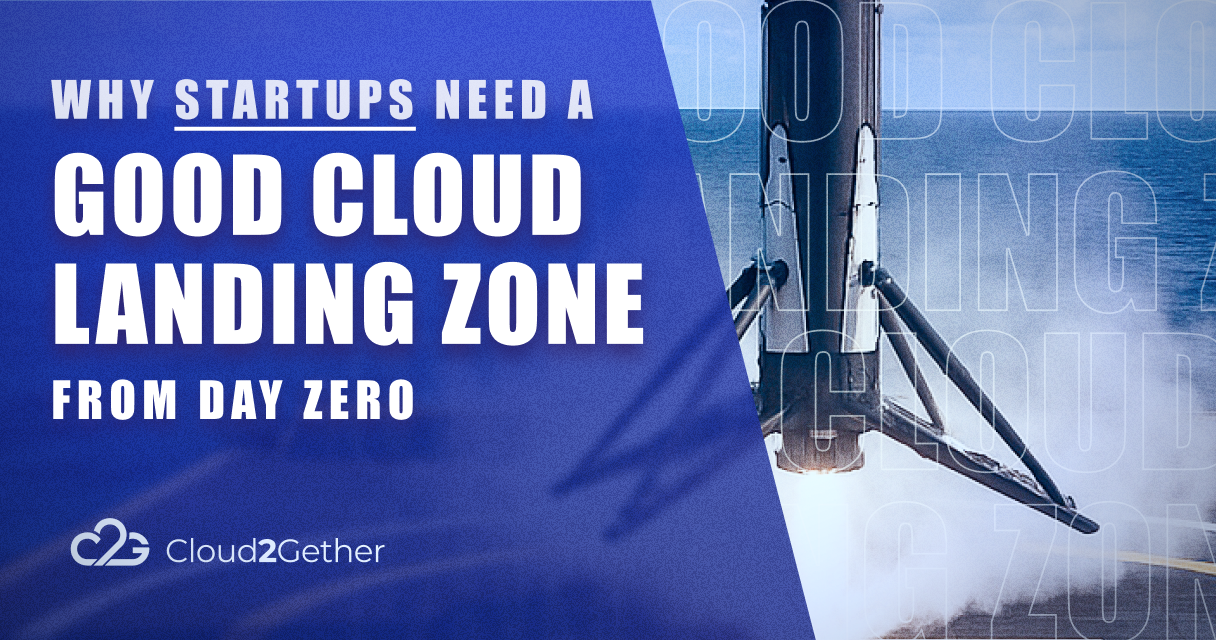
Why Startups Need a Good Cloud Landing Zone from Day Zero
Choosing the right cloud landing zone strategy at the start is not just a technical detail for startups—it shapes your ability to grow fast and safely. In our experience, setting up a structured environment from day zero can mean the difference between scaling smoothly or stalling due to high costs, security gaps, and compliance headaches. The core concept of a cloud landing zone involves much more than basic account setup: it defines how identity, access, cost monitoring, automation, and networks will work together as you scale.
Today, we challenge the idea that governance or “fixing things later” will save founders time. That’s one of the biggest risks a startup can take.
TL;DR
- Startups that ignore a consistent cloud landing zone face security blind spots, runaway costs, and technical debt that’s slow and expensive to fix.
- Getting identity, network, automation, and cost controls right from day zero helps startups go live faster, pass audits, and prevent vendor lock-in.
- Manual approaches (like ad-hoc tagging and permissions) will not scale with growth or multi-cloud expansion.
- Platforms that offer real-time inventory, billing visibility, cross-cloud analysis, and automated recommendations reduce complexity and risk—including our solution at Cloud2Gether.
We see in our clients’ journeys again and again: debt built at the start is expensive to unwind later. Rushed cloud foundations leave early teams blind to budget drift, open to audit failures, and stuck with manual processes. We think it’s always smarter to prepare your cloud workspace for growth, compliance, and change—right from that first login.
Cloud landing zone design isn’t a one-time project; it is the launching pad for product agility, investor trust, and efficient cloud spend for startups of any size.
Why cloud landing zones matter from the start
The numbers tell the story. Stanford’s research shows cloud adoption in small companies is speeding up every year. Startups can now unlock game-changing innovation and scale. But those benefits come with real cloud management risks:
- Untracked spend bleeding cash when every dollar matters.
- Too-wide permissions causing accidental data leaks or compliance failures.
- No tagging standards, making cost allocation impossible.
- Painful migrations later due to vendor-specific setups.
We’ve seen many teams try to “just get live” and promise they’ll circle back. Almost every time, those early choices create technical messes that block later funding, slow features, or force costly rewrites. A cloud landing zone gives you a safe, scalable, and visible springboard, so scrappy teams still move fast but don’t gamble their future.
Key takeaways
- Without environment structure, you can’t reliably control permissions, budgets, or secrets. Inevitably, mistakes scale with your growth.
- Audit failures, GDPR headaches, and runaway spend all can be traced back to skipping a proper cloud workspace setup.
- Automating everything with code (Infrastructure as Code) means you can repeat your setups, avoid drift, and speed up onboarding—especially in multi-cloud stories.
- Platforms like Cloud2Gether provide daily billing insight, cross-cloud governance, and automation that outpace the basic tools from AWS, Azure, or Google Cloud alone.

What is a cloud landing zone for startups?
Let’s clarify what we mean. A cloud landing zone is a set of pre-designed cloud configurations—covering networks, permissions, tagging, resource organization, billing alerting, and compliance guards—built before you launch cloud workloads. It’s not just another “best practice”. For startups, it’s about:
- Speed to market with a repeatable launchpad for each project or environment (dev, test, prod).
- Immediate cost and billing visibility split by app, team, or business unit.
- SOC2 and other compliance readiness, with evidence trails built-in.
- Architecture patterns that avoid lock-in and make multi-cloud expansion safe.
- No surprises in user permissions, network access, or traffic egress settings.
Cloud landing zones from large providers (like AWS Control Tower or Google’s project factory) offer some tools here. From our perspective, though, most tools miss the daily needs of startups: living billing dashboards, cross-cloud resource views, tag drift reporting, and actionable advice. That’s the gap we are focused on filling.
Common mistakes we see with startup cloud landing zones
It’s easy to postpone standards and checks in those first months. We hear these phrases often: “We’ll add tagging rules later.” “Permissions are fine for now, just give everyone admin.” “Our audit comes after launch.” Then the Series A comes, or a customer wants SOC2, or a team tries to manage costs—and chaos follows.
Common early missteps:
- No global tagging: Later, cost data is patchy and teams can’t see what’s burning spend.
- Weak account structure: Environments aren’t separated, so production and test data blur together.
- Manual network setup: Someone misses subnet hygiene and suddenly a bucket is open to the internet.
- IAM sprawl: No rules, so permissions balloon until an intern can delete prod data.
- Zero budget alerts: Credit card surprises, with no room to react.
By contrast, teams that build a structured landing zone (even a minimal one) avoid these pain points. Over time, their audit prep, cost projections, and developer hiring run smoother.
Core structure of a practical cloud landing zone
From our experience, great startup cloud landing zones—whether on AWS, Azure, GCP, or all three—share these components:
- Identity and access: Single sign-on, granular roles, strict separation of duties.
- Resource hierarchy: Environments isolated, clear folder/project/account structure.
- Network baselines: Private subnets by default, firewall rules, IP allow lists.
- Resource tagging: Enforced tags for cost, owner, team, app, environment, compliance state.
- Budget guards: Automated spend alerts, tagged resource cost breakdowns.
- Automation by code: All setup repeatable with Terraform or CloudFormation—no more clicking through the console by hand.
- Compliance controls: Logging, encryption defaults, audit trails from first resource created.
It’s not about gold-plating from the start. It’s about building the “rails” so fast-moving teams don’t go off track.

How a structured cloud landing zone shapes startup growth
Let’s look at two stories—one with a structured landing zone, one without.
- Scenario 1: Series A Startup, No StructureA fast-growing SaaS startup lets each engineer spin up resources as they see fit. No tagging mandate, no role-based access, no budget alerts. By Series A, finance wants a cost breakdown, auditors want logs, and a customer asks about access reviews. The team spends weeks sorting out permissions, scraping logs, and building reports by hand. Progress grinds to a halt.
- Scenario 2: Startup with a Structured Cloud FoundationA similar startup invests one week to deploy a basic cloud landing zone: enforced tagging, account separation, centralized logs, spend notifications. They meet audit requests in hours, instantly see which apps need scaling, and onboard new hires without extra permissions risk. Growth isn’t blocked by technical debt.
Gartner and MIT Sloan both note: better cloud setups drive higher sales growth, stronger security, and lower risk. That’s why well-designed landing zones become a business advantage, not just an IT benefit.
Practical best practices for cloud landing zones
In our work with startups, we’ve found a few practical steps make a big difference:
- Automate baseline setup: Write Infrastructure as Code (IaC) templates so every environment is spun up the same way. Tools like Terraform or Pulumi make this fast and easy to iterate on.
- Mandate tagging from the start: Require every resource to be tagged with owner, environment, and business unit. Automate tag checks as part of deploy pipelines.
- Centralize identity and billing: Set up single sign-on, group policies, and daily billing export dashboards.
- Don’t skip log management: Ship logs to a central bucket or SIEM. Turn on encryption and retention policies.
- Budget alerts are a must: Set per-project or per-team spend thresholds with automated notifications.
- Prep for compliance now: Even if you aren’t SOC2 required yet, having audit trails and permission reviews in place saves days later.
We believe the true test of a cloud foundation is when a new team arrives and gets all the right access, data, and controls automatically in minutes—not days.
To learn how you can dramatically reduce setup time and avoid cloud pains with proactive governance, try Cloud2Gether’s platform for startups. Our solution gives daily billing, real-time inventory, cross-cloud security drift checks, and actionable recommendations.
Multi-cloud, compliance, and avoiding lock-in with your landing zone
Startups rarely stay on one cloud forever. Maybe you’re acquired, maybe you expand to new markets, maybe you add ML capability from another provider. The costs of re-creating access policies or security baselines from scratch are huge if you only build for one cloud from the start.
We advise startups to design their landing zone for portability. That means:
- Common tagging, naming, and folder/account structures across clouds
- Centralized identity tied to your company SSO, not just each hyperscaler
- IaC templates stored in a versioned repo—easy to tweak, test, and share
- No proprietary monitoring agents or lock-in features if avoidable
Studies like those from the General Services Administration and the University of the People reinforce these choices. They highlight gaps around pricing, rights, and cost management—issues that can spiral if you build cloud setups with ad-hoc standards or without automation.
Early cloud decisions set the path for company flexibility and investor trust.
Conclusion: The startup’s edge—cloud landing zones from the ground up
Building cloud environments with guardrails, transparency, and repeatable automation isn’t overhead; it is a scaling advantage. We’ve seen too many teams lose time and money fixing things that could have been done right with little extra effort up front. The right cloud landing zone is the best insurance against governance surprises—or losing the fundraising momentum that depends on trust and control.
Action: If you want to see daily billing, unified visibility, and automated cloud recommendations made for startups, check out Cloud2Gether.
Frequently asked questions
What is a cloud landing zone?
A cloud landing zone is a set of automated templates and standards that define how all your cloud resources are grouped, secured, tracked, and billed. It includes identity controls, tagging, networks, automation, and more—so you can scale with structure and avoid costly mistakes as you grow.
Why do startups need a landing zone early?
Without a strong setup from day one, startups risk security gaps, uncontrolled spending, and compliance failures. Fixing these problems later is expensive and disruptive. A landing zone ensures consistent environments, cost tracking, and audit-readiness for every new project and team.
How does a landing zone improve security?
It centralizes identity and permission management, automates network segmentation, and enforces logging and data controls. With automated policies in place, teams avoid manual errors and reduce the risk of public data exposure or unauthorized access.
Is it expensive to set up a landing zone?
Most of the cost is in setup time, not direct spend. With open source tools and templates, even small teams can build strong foundations. Fixing problems later costs much more in lost productivity and unplanned cloud expenses.
Can I build a landing zone myself?
Yes, with Infrastructure as Code tools like Terraform or Pulumi, you can template your cloud setup and enforce consistency. However, automated platforms like Cloud2Gether make this process faster, provide more visibility, and help avoid mistakes as your stack evolves.
Continue Strengthening Your Cloud Strategy
Vendor lock-in is only one piece of the broader challenge companies face as their cloud footprint grows. The next step is understanding how cloud complexity impacts cost, architecture, and operational efficiency—especially in multi-cloud environments. To expand your strategy and build a more resilient cloud foundation, continue with our next guide:

You may also like
Vendor Lock-In: Risks and Multi-Cloud Strategies Guide
A Guide to Managing Multi-Cloud Complexity and Costs